
- Education
- Introduction to Trading
- How to Trade Gold
How to Trade Gold
Ever wondered what it would be like to navigate the world of gold trading? Whether it’s the allure of its timeless value or the thrill of watching the market’s pulse, gold holds a special place in many investors’ hearts. Starting from understanding how the prices move to learning the basics of buying and selling, trading gold can seem complex at first, but it’s a journey worth exploring.
In this article, we’ll break down the essential steps to get you started—from the different ways you can trade gold to the key factors that influence its price. It’s not just about numbers; it’s about building confidence, knowing when to act, and discovering how gold fits into your financial story.

How to trade Gold
First of all, let's learn what are the steps in theory that you will need to go through, and then we will show you on example how it should be done.
Here are the steps on how to trade gold in a more casual and easy-to-understand language:
1. Learn about Gold
Get a basic understanding of how gold trading works, including what affects its price and what's happening in the market right now. This will help you make smarter trading decisions.
2. Pick a Trading Platform
Find a reliable online platform where you can trade gold. Look for one that's easy to use, safe, and has helpful tools and support.
3. Open an Account
Sign up and create an account on your chosen platform. They'll ask for some personal info and may need to verify your identity.
4. Put Money In
Deposit some money into your trading account. The amount required varies, so make sure you have enough to get started.
5. Research and Analyze
Use the tools and resources on the platform to research and analyze the gold market. Look at price charts, read news updates, and learn about different strategies that can help you find good trading opportunities.
6. Make a Trading Plan
Decide on a plan for your trades. Figure out how much risk you're comfortable with, the best times to trade, and when you'll enter or exit trades. Having a plan makes it easier to stick to your strategy.
7. Practice with a Demo Account
If the platform offers a demo account, use it to practice trading without using real money. This lets you get the hang of things and see how your strategy works without risking anything.
8. Start Making Trades
Once you feel confident, start trading for real. You can decide whether to buy gold (going "long") or sell gold (going "short") based on your analysis of the market.
9. Keep an Eye on Your Trades
Watch how your trades are doing. If the price of gold moves in your favor, you can close the trade and make a profit. If it goes against you, you might end up losing money.
10. Learn and Improve
Regularly review your trades to see what worked and what didn't. Learn from your experiences and make adjustments to your strategy and risk management techniques as needed.
To begin trading, you can start by downloading MetaTrader 4, a popular trading platform. MetaTrader 4 provides a user-friendly interface and a range of tools for analyzing the markets and executing trades. Once you have completed the MetaTrader 4 download, you can set up your account, deposit funds, and begin exploring the opportunities in the financial markets.
Here are the steps on how to start gold trading on IFC Markets:
- Open an account. You can open an account with IFC Markets through their website. You will need to provide some personal information, such as your name, address, and email address. You will also need to choose a trading account type and deposit funds.
- Choose a trading platform. IFC Markets offers two trading platforms: NetTradeX and MetaTrader 4 (MT4). NetTradeX is their proprietary platform, while MT4 is a popular third-party platform. You can choose the platform that best suits your needs.
- Learn about gold trading. Before you start trading gold, it is important to learn about the market. You should understand the factors that affect the price of gold, such as economic conditions, interest rates, and political events. You should also learn about different trading strategies and how to manage risk.
- Start trading. Once you have learned about gold trading and you are comfortable with the risks involved, you can start trading. You can place trades through the IFC Markets trading platform.
Here is an example of how you could start trading gold on IFC Markets:
- You open an account with IFC Markets and deposit $1,000.
- You choose the NetTradeX trading platform.
- You learn about gold trading and develop a trading strategy.
- You place a buy order for 1 lot of gold CFDs.
- The price of gold goes up and you close your trade for a profit of $50.
Here is an example of a chart patterns trading strategy using a 1000$ deposit and a buy order for 1 lot of gold CFDs. The chart is for the daily price of gold.
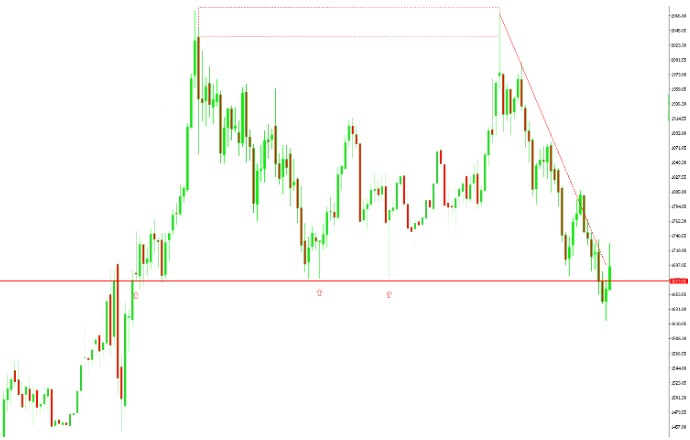
Setup: The price of gold is trading in a downtrend. On the daily chart, we can see a series of bearish candlesticks, with the most recent candle closing below the previous day's low.
Signal: A bullish engulfing pattern forms. This is a reversal pattern that occurs when a large green candle engulfs a large red candle. The engulfing candle indicates that the bulls are gaining control of the market and that the downtrend may be coming to an end.
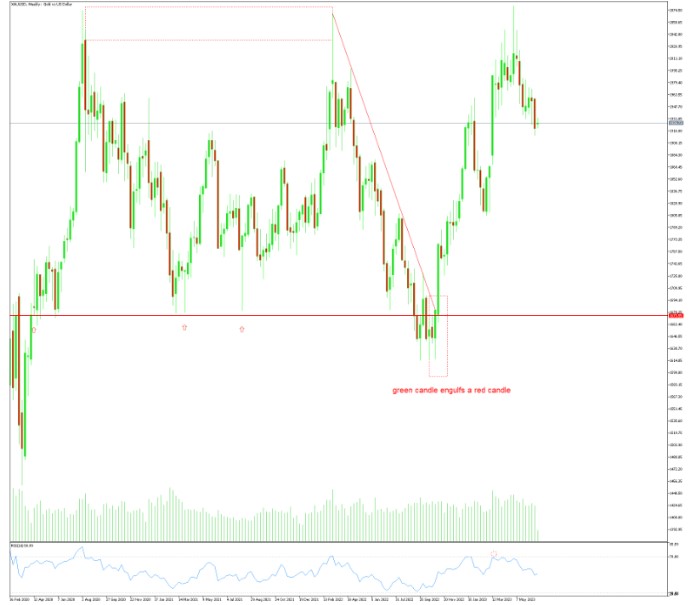
Entry: We enter a long CFD trade at the open of the next candle. In the chart you can see how the price started the uptrend.
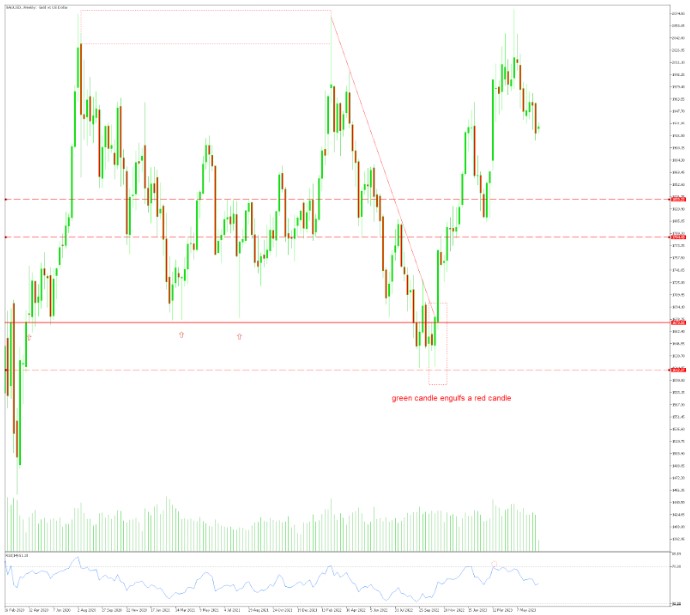
Stop-loss: We place our stop-loss order below the low of the bearish engulfing candle.
Target: Our target is to reach the previous day's high.
The total amount of money that we are risking on this trade is equal to the stop-loss order, which is $50. If the price of gold goes below the stop-loss order, we will lose $50.
The potential profit on this trade is equal to the difference between the entry price and the target price, which is $300. If the price of gold reaches the target price, we will make a profit of $300.
The risk-to-reward ratio for this trade is 6:1. This means that for every $1 that we risk, we have the potential to make $6.
If the trade goes our way, we will close the trade at the target price and make a profit of $300. However, if the trade goes against us, we will close the trade at the stop-loss order and lose $50. But as you can see the trade went our way and we earned some good money.